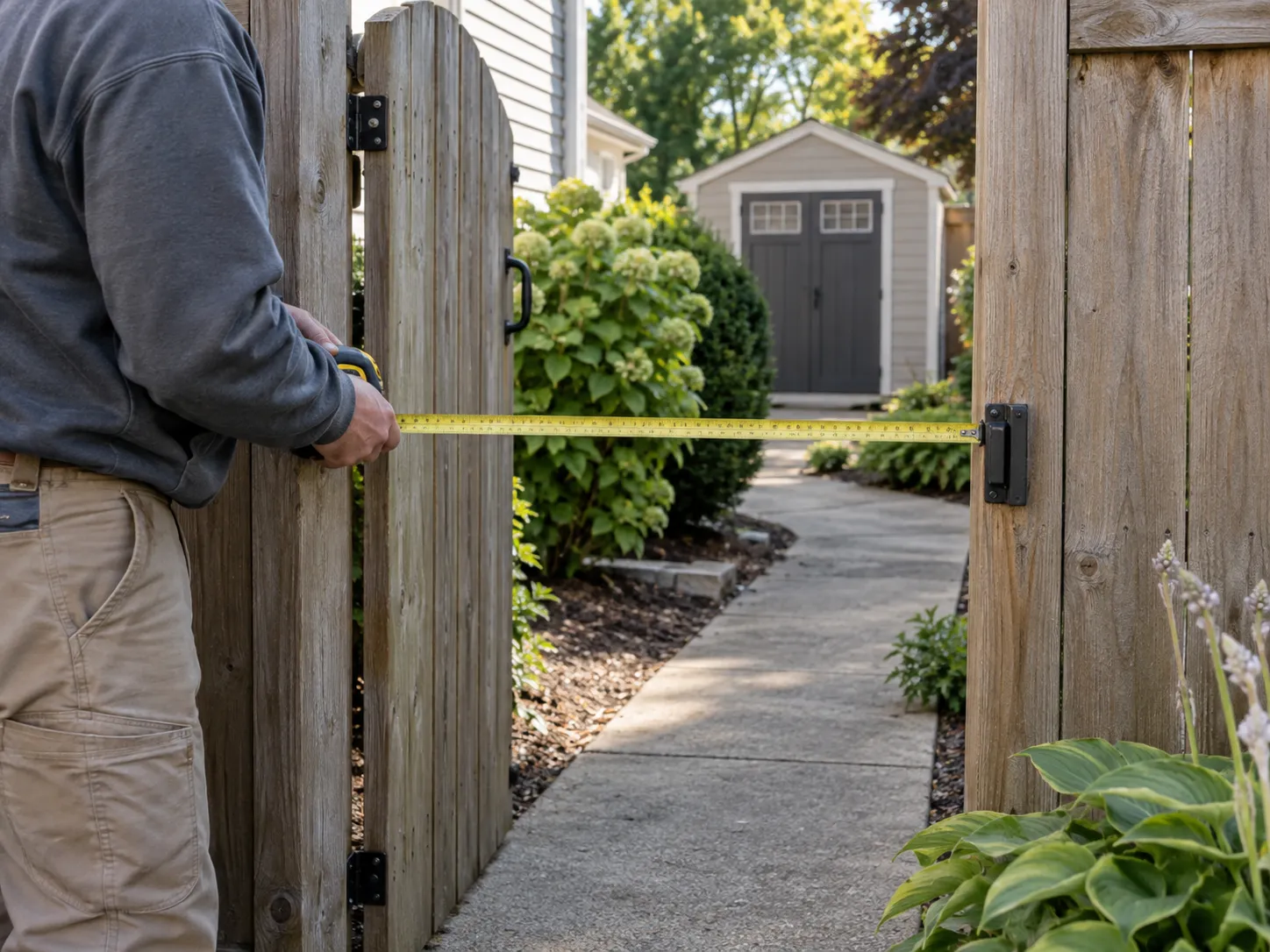
Use the clear opening
Open the gate fully and measure between the points that material can actually pass. Include posts, hinges, handles, latches, and anything fixed just beyond the opening.
Walk the whole route
- Narrowest width
- Tightest turn
- Lowest branch or wire
- Number and height of steps
- Steep or soft sections
- Distance from shed to loading point
Photograph each constraint in sequence
Start at the shed and take overlapping photographs all the way to the street or driveway. A simple sequence is more useful than isolated close-ups because it shows how the route connects.
Access worksheet
| Checkpoint | Record |
|---|---|
| Gate | Clear width, swing direction, nearby turn |
| Path | Narrowest width and surface |
| Steps | Count, rise, and handrail obstruction |
| Slope | Direction and soft-ground areas |
| Overhead | Branches, eaves, utility lines |
| Loading point | Parking, driveway, or curb distance |
Do not remove fixed obstacles just for an estimate
Moving a planter is one thing. Altering a fence, cutting a utility, or entering an unstable structure is not preparation. Photograph the constraint and discuss it first.
Next step
Review the matching backyard shed removal scope, then send photos of the shed, base, contents, and access route before calling.