The debris stream is mixed
A typical shed can include framing lumber, sheathing, roofing, metal fasteners, windows, shelves, flooring, and stored contents. Facilities may treat these materials differently, so sorting and acceptance should be checked instead of assumed.
Four possible base outcomes
| Base condition | Possible agreed outcome |
|---|---|
| Wood floor on blocks | Remove floor; discuss blocks separately |
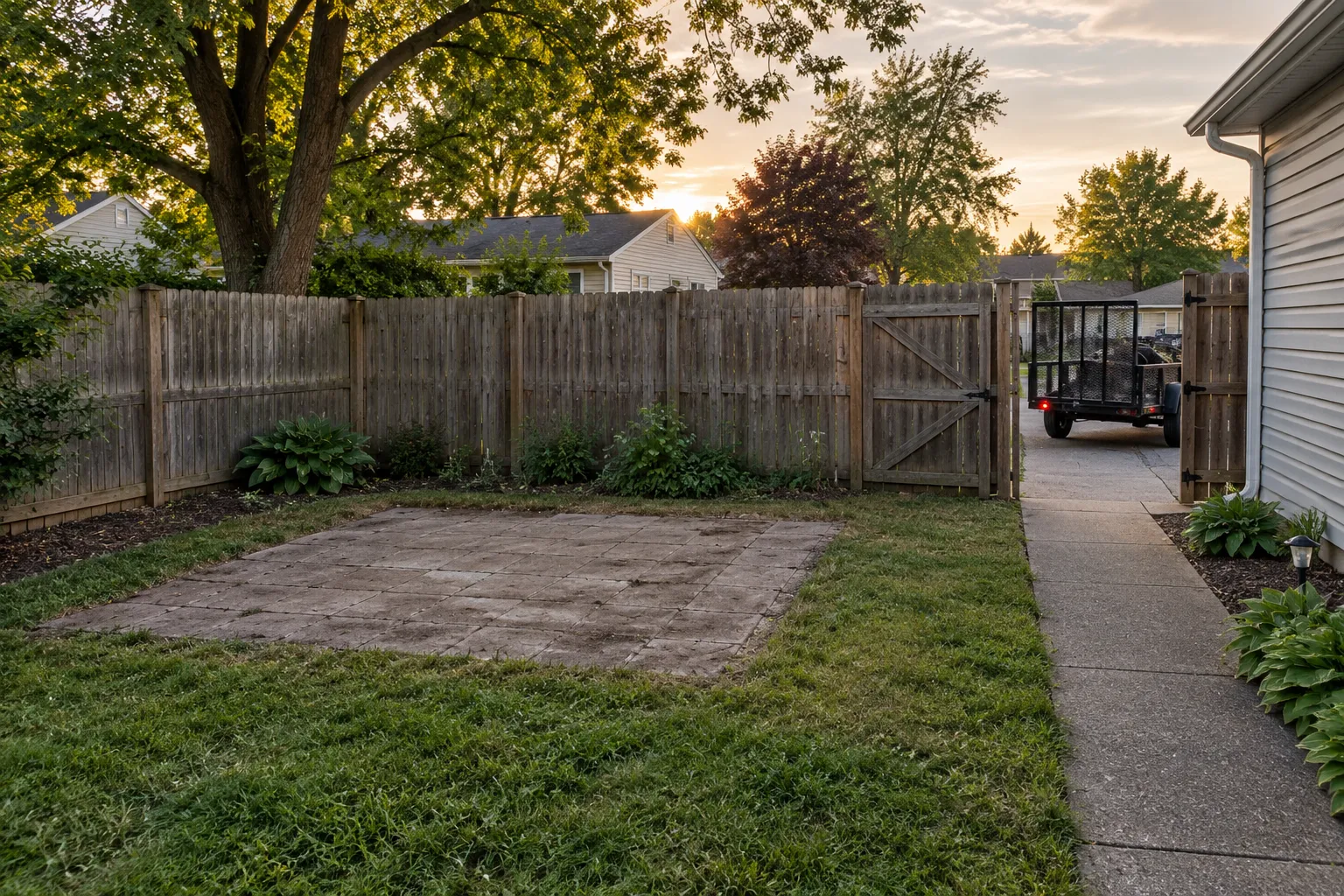
| Pavers or gravel | Leave, collect selected loose material, or quote separate removal |
| Anchored frame | Identify anchors and include only if approved |
| Concrete slab or footings | Separate heavy-material and restoration scope |
A clean work area is not full restoration
A loose-debris sweep can leave a visible footprint, compacted soil, dead grass, pavers, gravel, or a slab. Landscaping, drainage correction, new-base preparation, and seeding should not be implied by “shed removed.”
Local disposal context
Montgomery County Solid Waste provides disposal and recycling services to county municipalities, businesses, and residents. Greene County publishes separate solid-waste and construction-and-demolition resources. Current acceptance, fees, and restricted materials must be confirmed with the responsible facility.
Sources
Montgomery County Solid Waste: https://www.mcohio.org/401/Solid-Waste. Greene County Solid Waste Disposal: https://www.greenecountyohio.gov/1553/Solid-Waste-Disposal. Retrieved October 9, 2026.
Next step
Review the matching shed debris removal scope, then send photos of the shed, base, contents, and access route before calling.